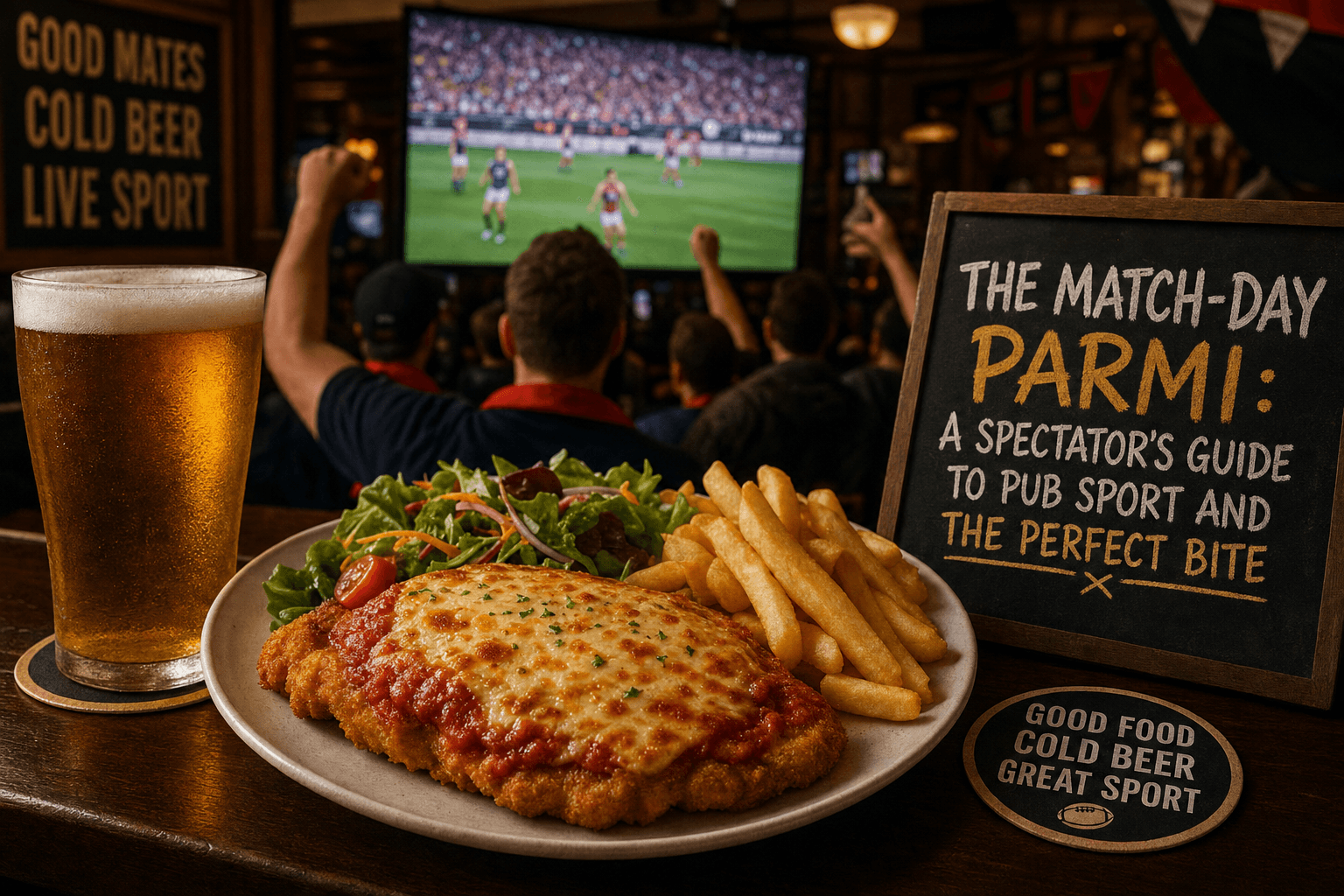
The Match-Day Parmi: A Spectator’s Guide to Pub Sport and the Perfect Bite

Brady Stroud
—20 July 2026
Chicken parmigiana has always had a bit of stadium energy about it. It arrives like a captain jogging out of the tunnel: golden, loud, impossible to ignore, and usually followed by a small cheer from someone at the table who wishes they’d ordered one too.
But there’s a particular magic to eating a parmi while watching sport at the pub. The screen is glowing. The table is full. Someone is explaining the offside rule with sauce packets. Someone else is insisting the ref has “lost the plot” despite having seen only one replay. And in front of you sits the most reliable player in the room: crumbed chicken, tomato sauce, ham and melted cheese, ready to carry the evening.
This is the match-day parmi — not just dinner, but a full spectator experience.
The Parmi Has a Formation
A great football side needs structure. So does a great chicken parmigiana.
Think of the crumbed chicken as the back line: steady, disciplined, and doing the hard work. The ham sits in midfield, linking crunch to melt. The tomato sauce pushes forward with confidence, adding movement and colour. The cheese? Clearly the striker. It gets the glory, stretches across the top, and is responsible for the big finish.
When all the parts understand their role, the whole plate works. Too much sauce and the back line collapses. Cheese that barely melts? No attacking threat. Chicken that’s thin, dry or overworked? That’s a side parking the bus and hoping nobody notices.
A proper match-day parmi should feel balanced enough to survive a tense second half.
Kick-Off: The First Bite Matters
The first bite sets the tone. You don’t want to go in too cautiously, nibbling at the edge like you’re still waiting for team sheets. But you also don’t want to charge straight into the molten centre and lose the roof of your mouth before the first goal.
The smart play is the corner bite: a little chicken, a bit of crumb, maybe a ribbon of cheese if you’re lucky. It tells you everything you need to know. Is the chicken juicy? Is the crumb still holding? Is the sauce lively or sleepy? Has the cheese settled into a satisfying blanket?
It’s the culinary equivalent of the opening ten minutes: early signs, quick judgments, and at least one person saying, “This could be a good one.”
The Offside Rule, Explained With a Parmi
Every pub has one person who claims they can explain offside quickly. They cannot. But a chicken parmi can help.
Imagine the chicken is the defensive line. The cheese is the attacking player. The sauce is the pass. If the cheese is hanging too far over the edge of the chicken before the sauce gets there, someone at the table is legally required to shout, “Flag’s up!”
Is this technically accurate? Not entirely. Is it more useful than watching someone draw invisible lines in the air with a chip? Absolutely.
The point is this: spacing matters. In football, in life, and on a parmi. You want coverage, not chaos. A little overhang is exciting. Total structural collapse is asking for trouble.
Half-Time Is for Assessment
At half-time, the plate tells a story.
Maybe you’ve cleared one side neatly, carving through the parmi with professional focus. Maybe you’ve created a battlefield of chips, salad leaves and runaway cheese. Maybe you got distracted by a penalty shout and let the best corner go lukewarm.
This is the moment to reset. Rotate the plate if needed. Rescue a crispy edge. Reunite a loose patch of cheese with its rightful chicken. Consider whether you’re saving the best bite for last or accidentally leaving it vulnerable to a “just one chip” tablemate who has started eyeing your plate.
Half-time isn’t just for punditry. It’s for parmi management.
Extra Time Requires Strategy
Some matches refuse to end. Finals go to extra time. Debates about handball become legal proceedings. A quick pub dinner quietly turns into a three-hour residency.
This is where the match-day parmi proves its worth. It has stages.
Hot and dramatic at arrival. Comforting and dependable through the middle. Still capable of a final flourish if you’ve preserved a cheesy section for the closing minutes.
The trick is pacing. Don’t sprint through the whole thing before the first half-hour unless you’re prepared for a long, empty-plate wait while everyone else is still eating. A parmi rewards the spectator who understands tempo.
The Table Becomes a Commentary Box
One of the best things about a match-day parmi is how it turns ordinary people into analysts.
“That cheese pull had length.”
“Good crumb retention under pressure.”
“Sauce distribution has improved since last season.”
“Bit soft down the left flank.”
None of this is necessary, but all of it feels important at the time. The parmi gives the table a second match to discuss — one where everyone can be an expert and nobody needs VAR.
Why It Works So Well
Chicken parmigiana suits sport because it delivers the same things we want from a big match: drama, comfort, tension, and payoff.
There’s the anticipation when it leaves the kitchen. The visual impact when it lands. The risk of a scalding first bite. The satisfaction of crunch meeting melt. The tiny tragedy of the final mouthful. It’s emotional without being complicated.
And unlike your team, the parmi usually turns up.
Conclusion: The Parmi Is the Real MVP
Whether you’re watching a World Cup final, a local derby, a Sunday afternoon fixture or a match you only care about because your mate added it to a multi, the chicken parmigiana belongs at the centre of the table.
It’s hearty enough for nerves, generous enough for celebration, and familiar enough to keep you grounded when the ref makes a decision that causes the entire pub to become constitutional scholars.
So next time the big screen is on and the pub is buzzing, don’t just order dinner. Order the match-day experience: a golden, cheesy, sauce-topped classic that can handle regulation time, extra time and whatever nonsense happens in the comments section after the final whistle.
What’s your match-day parmi ritual? Do you save the best bite for last, order it before kick-off, or demolish it before the teams are out of the tunnel? Share your thoughts in the comments — and bonus points if you can explain offside using only pub food.